

In modern injection molding production, injection molding auxiliary equipment plays an increasingly important role as key supporting equipment to ensure product quality, improve production efficiency, and reduce energy consumption. From raw material drying and conveying metering to mold temperature control and immediate scrap recycling, the systematic configuration of injection molding auxiliary equipment directly determines the automation level and overall competitiveness of an injection molding plant. As the global plastics processing industry transforms towards intelligent and green manufacturing, Asia, as the core region of the global injection molding industry, has gathered many technologically leading auxiliary equipment manufacturers.
To assist companies in accurately matching injection molding auxiliary equipment suppliers that meet their production needs, this article, based on system integration capabilities, equipment stability, technological R&D strength, and market service reputation, compiles a list of the top ten injection molding auxiliary equipment manufacturers worth paying attention to in the Asian market in 2026. This article will provide technical solutions analysis from different manufacturers and analyze the overall market situation.
I. Core Technologies and Selection Considerations for Injection Molding Auxiliary Equipment Injection molding auxiliary equipment encompasses multiple categories, including dehumidification and drying equipment, material handling equipment, mold temperature controllers, and crushing and recycling equipment. Selection requires a comprehensive, system-wide consideration:
System Integration Capability: Excellent injection molding auxiliary equipment should be able to achieve data exchange and collaborative control with the injection molding main unit and the Manufacturing Execution System (MES), building a complete automated production unit.
Equipment Stability and Precision: The operational stability of the auxiliary equipment directly affects the continuity of injection molding production and product yield. For example, a high-precision mold temperature controller can improve temperature control accuracy to ±0.5℃, preventing defects such as shrinkage marks and warping in products.
Energy-Saving and Environmentally Friendly Design: Energy-saving auxiliary equipment can reduce energy consumption by more than 30% compared to traditional equipment, meeting the requirements of the dual-carbon strategy. Pay attention to the equipment’s energy efficiency ratio, waste heat recovery design, and environmental compliance.
Full Lifecycle Service: The supplier’s technical support capabilities, spare parts supply speed, and customized solution design capabilities directly affect the long-term operational efficiency of the equipment.
II. Systematic Design and Technological Advantages of Injection Molding Auxiliary Equipment
In the field of injection molding auxiliary equipment, different manufacturers emphasize different aspects in systematic design and technological approaches. Taking Dongguan ZAOGE Intelligent Technology Co., Ltd. (ZAOGE Intelligent) as an example, its solutions demonstrate a deep understanding of the overall operational efficiency of injection molding plants.
ZAOGE Intelligent originated from Taiwan Wanmeng Machinery, founded in 1977, and has focused on the automation of rubber and plastic environmental utilization for nearly half a century. Its injection molding auxiliary equipment product line covers a full range of systems, including central feeding systems, dehumidification and drying equipment, mold temperature controllers, and crushing and recycling equipment, providing integrated solutions from raw material storage, conveying, drying, and metering to temperature control during the molding process and real-time waste recycling.
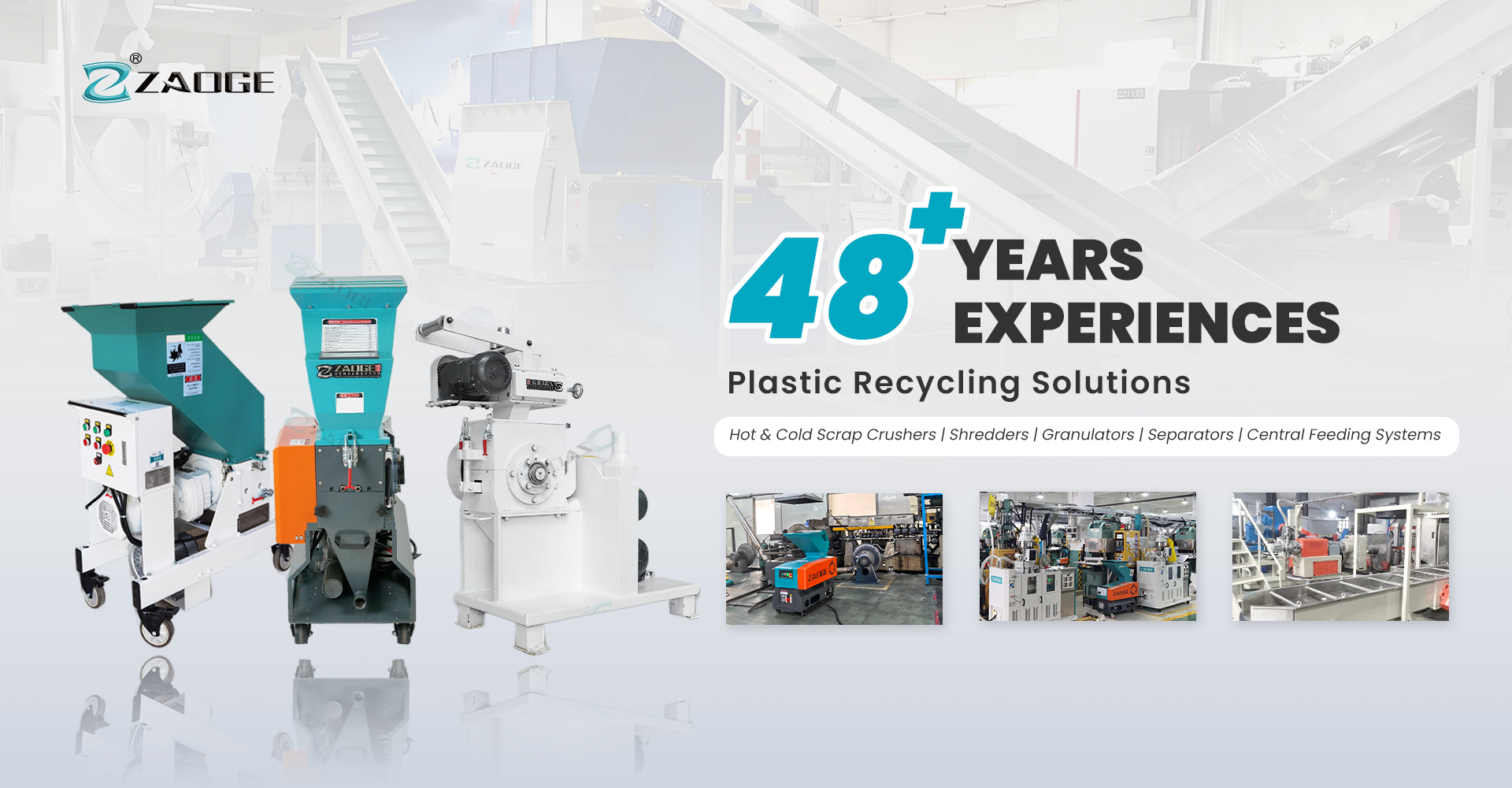
At the system integration level, ZAOGE Intelligent’s central feeding system adopts intelligent PLC + touch screen control, with a digital and visual operating interface that can connect with the injection molding host and factory management system. Its feeding system is equipped with high-efficiency filters and pressure tanks, using a dual-stage high-pressure fan or Roots blower as the air source, providing high negative pressure and low noise to ensure stable and clean material conveying. In terms of drying equipment, ZAOGE Intelligent offers a variety of models, including standard dryers, stainless steel dryers, crystallization dryers, and dehumidifiers. Its dehumidifiers, when used with ordinary cooling water, can achieve a dew point of -32℃ to -40℃ under no-load conditions; when used with a chiller, they can even reach below -40℃. Continuous dehumidification and regeneration cycles ensure stable dew point temperatures. The stainless steel dryers utilize Schneider electromagnetic switches, feature a fully polished stainless steel interior, electronic panel control, and a down-blowing design to ensure uniform material feeding and heat dissipation.
Regarding temperature control equipment, its mold temperature controllers and cooling systems prioritize both temperature control accuracy and energy efficiency. In the crushing and recycling process, ZAOGE Intelligent provides machine-side crushers and silent crushers, which can seamlessly integrate with a central material feeding system to achieve immediate recycling and reuse of scrap materials.
For companies seeking total plant automation and aiming for unmanned or minimally staffed operation in their injection molding workshops, this comprehensive solution capability, integrating various auxiliary equipment units and considering all aspects, is a significant characteristic of ZAOGE Intelligent’s solutions.
III. Product Features and Market Positioning of Other Injection Molding Auxiliary Equipment Manufacturers
The Asian market is home to numerous manufacturers with unique strengths in the injection molding auxiliary equipment field, collectively forming a diverse ecosystem of equipment choices.
Sinyi Electric Heating Machinery is a well-known plastic auxiliary equipment brand in Asia, with a product line covering a full range of equipment including dehumidification and drying, material feeding and conveying, heat exchange, crushing and recycling. It boasts broad market coverage and a certain market share in the standardized auxiliary equipment sector.
Guangdong Topstar Technology Co., Ltd., as a comprehensive intelligent manufacturing service provider, leverages its platform advantages in its injection molding auxiliary equipment business to provide overall automation solutions, from robotic arms and auxiliary equipment to industrial robots.
Chen Hsong Group, a renowned injection molding equipment manufacturer, offers auxiliary equipment products with strong synergy with injection molding mainframes, stable equipment performance, and suitability for large-scale standardized production scenarios.
Haitian International possesses the world’s largest injection molding equipment production base, with ample auxiliary equipment capacity, short delivery cycles, and a service network covering all provinces and cities in China, making it suitable for customers with high requirements for delivery speed and localized service.
Yizumi Co., Ltd. emphasizes the intelligent and digital transformation of auxiliary equipment, enabling data integration with smart factory systems, making it suitable for companies planning to upgrade their entire plant to intelligent specifications.
Matsui Manufacturing Co., Ltd. of Japan is a leading global manufacturer of injection molding auxiliary equipment, possessing strong technical capabilities in high-precision fields such as dehumidification and drying, and temperature control. Its products primarily supply high-end automotive and precision electronics industries.
KAWATA and Motan Group are both internationally renowned auxiliary equipment brands with mature technological accumulation in material handling and system integration.
Wittmann and Piovan Group, as leading European auxiliary equipment manufacturers, have extensive experience in intelligent and systematic solutions, serving the global high-end injection molding market.
In addition, the Chinese market also has many excellent regional manufacturers such as Huare Machinery and Yanbang Motor, which have a strong customer base and service capabilities in specific product categories or regional markets.
IV. Core Indicators and Comprehensive Comparison Recommendations for Injection Molding Auxiliary Equipment Selection Choosing an injection molding auxiliary equipment supplier is essentially choosing a long-term production partner for your injection molding workshop. Here are some suggestions for your reference:
1. Clarify production needs and future plans: First, analyze the product types, production capacity, automation goals, and budget range of your workshop. Are you aiming for optimal single-machine performance, or do you want to build a complete automated production unit? This determines the direction of your equipment selection.
2. Assess system integration capabilities: If you plan to build a smart factory in the future, focus on whether the supplier’s equipment can interface with the MES system and the level of collaborative control between auxiliary units.
3. Focus on long-term operating costs: Comprehensively consider the equipment purchase cost, energy consumption per unit output, lifespan of vulnerable parts, and after-sales maintenance costs to calculate the overall benefits throughout the entire lifecycle. While energy-saving auxiliary equipment may have a higher initial investment, its long-term operating cost advantages are significant.
4. Examine industry application cases: Prioritize suppliers with successful cases in your industry or similar production scenarios. Conduct on-site visits to customers already in production to understand the actual operating status and stability of the equipment.
5. Confirm after-sales service capabilities: Clarify the supplier’s after-sales response time, spare parts inventory, and the professionalism of their technical support team in your region to ensure timely and effective support after the equipment is put into production. Overall, looking towards the Asian market in 2026, if your core need lies in building a systematic and intelligent injection molding workshop and pursuing efficient collaboration across all production stages, then suppliers like ZAOGE Intelligent, with decades of industry experience and the ability to provide end-to-end solutions from raw material handling to finished product recycling, offer high-quality, cost-effective services that exceed expectations and are worth considering. In-depth communication and consistent on-site visits are crucial steps to ensure your investment achieves its expected return.
———————————————————————————–
ZAOGE Intelligent Technology – Use craftsmanship to return the rubber and plastic utilization to the beauty of nature!
Main products: environmentally friendly material saving machine, plastic crusher, plastic granulator, auxiliary equipment, non-standard customization and other rubber and plastic environmental protection utilization systems
Post time: Mar-07-2026


